
Literature Index for all things Japanese Toys…

The All Soft Vinyl Figure Catalog 2000
This all-color 150+ page “mook” is a mini-vinyl fetishists’ dream come true. All manner of vinyls are covered here: robot anime vinyls cataloged in date order, sentai hero vinyls, numerous incarnations of Godzilla and his pals, Tiger Mask villains, mascot characters, Mach Baron enemies, cute key-chain vinyls, mini Robocon characters…the list goes on. You won’t find any tricked-out missile firing vinyls here or an extensive cataloging of every variation of any particular character, but the book does offer a very broad and thorough survey of soft vinyl character toys. Don’t forget to check page 94 to learn about Irutan’s sordid affairs at the 1975 Okinawa Oceanic Expo.
Seibido Shuppan
1998
ISBN: 4-415-09321-3

THE Chogokin
THE Chogokin is a great book. The reissue is currently available for between $40 and $75 US and includes updated information covering Power Rangers, Beetleborgs, and the new Soul of Chogokin Mazinger Z.
This aptly titled book seems to be the only volume of diecast-related paraphernalia officially sanctioned by Bandai. It’s also one of the oldest books about popy diecast, originally printed in the late 1980s; until a recent reprint knocked prices back down to reasonable levels, it was also going for hundreds of dollars. It features spectacular photos and a large-format size; it’s got incredible close-ups of some very hard-to-get pieces; it even has snippets from the chogokin commercials that aired on Japanese TV throughout the Seventies and early Eighties. The reprinted version also features ten or so new pages, some of them all-color, focusing on new pieces such as the Soul of Chogokin Mazinger, the new Raideen, and other 1990’s pieces.
THE Chogokin‘s real strongpoint, however, isn’t the photos or the size. THE Chogokin stands apart from the rest simply because of it’s second half, which features a wealth of interviews and a detailed “factoids” section. There are interviews with master mecha designers Go Nagai (Mazinger) and Yoshikazu Yasuhiko (Raideen), and with Popy’s head of industrial design in the 1970s. The book also features a fascinating walk-through of the Bandai Tochigi Factory, where many cho-go-kin pieces were produced. (The train stop at the factory is actually called “Omocha no Machi,” or “Toy-Town.”)
However, it’s all in Japanese. Sorry to rub your noses in it again, kids. The fact is that the book is of limited utility to those who can’t read the language. Furthermore, it’s organization does not lend it for use as a field-guide; this is a coffee-table-style artbook. However, as it DOES feature spectacular, elegant photography in a large size, it’s the book to show your non-fan “friends” to prove you’re not such a sociopath after all. It’ll also undoubtedly fan your flames of toy-lust to a hellish crescendo. Get the hose ready.

Figure Empire
This is one of the most eclectic book on Japanese toys produced. While the photography is sub-par at best, 98 all-color pages jam-packed with a bizarre selection of die cast and vinyl toys, model kits, trading cards, dioramas, toy guns, “hero bikes” and vehicles more than make up for any artistic shortcomings. The text is equally dense, and goofy Engrish phrases used throughout adds to the fun (“Let’s go vintage!!,” “Funky Monkey Toys,” “Let’s Go! Funky Wrestlers!!” etc). Features include High Complete Models, Popynika vehicles, Tigermask, Kamen Rider and Robocon vinyls, Henshin Cyborg toys, newer Marusan vinyls, Red Baron trading cards, a guide to the Rainbowman series, Yamato toy ships, toy bases, and many others. Flipping through this work, the authors’ feverish excitement for the subject matter seems almost palpable. A second volume followed in 1998.
Byakuya Shobo
Mook #24
1997

Figure Empire 2
A sequel to the Figure Empire mook, this one is just as crammed full of shots of vintage toys, but somehow feels less vibrant than the first volume. Still, that depends of course as to what you’re into. Features “cloth” toys (Saint Seiya, Cyber Cop, Spiral Zone, etc.), Machine Robo, sentai robots, Takatoku “mech” toys, mini vinyls, trading cards, and more.
Byakuya Shobo
Mook #29
1998
ISBN: 4-89367-547-8

GO NAGAI: All His Works
A 30th Anniversary Celebration of Go Nagai. Available for under $40 US. Contains fantastic images of Manga art, anime stills, and toys. Also has great pictures of the Man in Action.


Go Nagai’s Premire Toys Catalogue
(Nagai Go and Dynamic Pro Otakara Toys Collection)
Edited by Yasuhiro Ishiji
review by Matt Alt, May 7, 1999
Does the world need yet another guide to collecting Japanese toys? I don’t know. But I do know one thing: I like this one.
I was lucky enough to get an advance review copy of Go Nagai’s Premire Toys Catalog, and can safely say it’s more than worth the 1200 yen cover price. It’s actually a one-shot magazine, not a book, but I don’t think any other Japanese toy-collecting text offers as wide an array of toys crammed into its pages as this one does.
Vinyls, diecasts, jumbos, clothing, food-product tie-ins — you name it: if it was licensed from Go Nagai or Dynamic Pro, it’s probably in here. Of course, there’s ample coverage of Mazinger, Getta Robo, Tiger Mask, and other mainstay toy-lines, but what really sets this tome apart is the lovingly detailed photo-exposes on the toys of God Mazinger, Groizer X, Astekaizer, X-Bomber, Mazin Saurer, and a whole host of other obscure and unloved toy lines that really haven’t been covered in detail anywhere else.
For those who can read Japanese, the interview of Dynamic Pro employees (conducted by toy-collecting legend Take-Shit) is a thrill. Besides being a total toy geek-out (and I mean that with the deepest respect), it features such bombshells as the fact that the original head for the Jumbo Great Mazinger was actually sculpted by Dynamic Pro and not by Popy. An interview with Nagai himself is noticeably missing, however (there’s only a single mini-interview at the very back of the book. I guess he’s still recovering from his interview in THE Chogokin.)
The only minor flaw with the book is the fact that it’s of limited use as a “field guide.” Only a small handful of Jumbo Machinders are shown (what happened to Getta III?) and many of the toys are, uh, “battle-damaged.” But that being said, the obsession and love that went into creating this book are apparent on every photo-packed page. Go Nagai’s Premire Toys does a spectacular job of cataloging some of the more bizarre specimens out there. And don’t miss out on the opportunity to buy a pair of those Shono Planning Mazinger vinyls!

Green Arrow Graffitti #13
review by Matt Alt, October 1998
An incredible archive of Popy Chogokin robots and vehicles. Includes box art and variant comparisons as well as serial numbers charts. The perfect size for toy travels.
Widely referred to as simply “Green Arrow Graffiti,” this book is actually a single volume in a set of books dedicated to various collecting subcultures. Other Green Arrow volumes feature exposes on camera collecting, digital-watch collecting, wine collecting, and sneaker collecting.
Simply put, this Green Arrow volume is the one-stop field guide for collectors of Popy chogokin and Popinika pieces. It features individual photographs of almost every Popy piece and highlights the differences between various releases of the toys. It includes a chronological organization of the toys and is further broken down into eight sections (Dynamic Pro robots, Sentai team-members, Sentai Robots, Comical Robots, etc.)
Although there’s little (if any) English used at all in the book, the Green Arrow Graffiti Chogokin book is indispensable for use in identifying and categorizing hard-to-find pieces. It’s the most comprehensive, logically organized cataloging of chogokin and popinika toys released to date. There’s not much background information given on the pieces, but it’s not that kind of book: what it sacrifices in depth it more than makes up for in breadth.

Hyper Hobby Vol. 04

Another periodical featuring Go Nagai. Available for under $15 US.
Kazunori Saito Collection
Review by Matt Alt + Alen Yen, October 2008


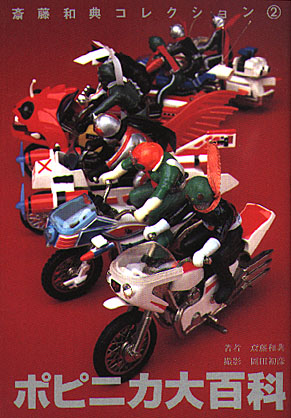
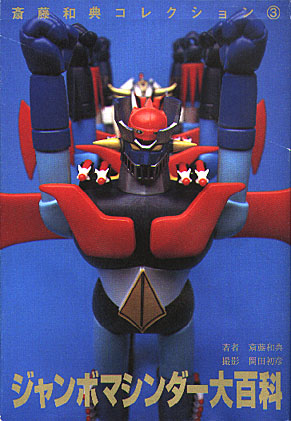
The Kazunori Saito Collection series, commonly referred to as the “Saito Books,” is a three-volume set of high-quality photos of Popy toys. The three volumes are called The Encyclopedia of Chogokin, The Encyclopedia of Popinika, and The Encyclopedia of Jumbo Machinders, respectively. Besides being an avid toy collector, Saito is a commercial planner for Japan’s largest advertising agency, and the quality level of the photos in his books is outstanding.
 The only real problem with the Saito series is that it’s simply not as comprehensive as books such as Green Arrow Graffiti or The Chogokin. Furthermore, as they feature toys directly from Saito’s personal collection, several of the pieces are incomplete, damaged, or missing stickers. All in all, they’re great books, but those seeking an absolutely comprehensive guide to chogokin and popinika would probably do better with Green Arrow or Nishimura’s Treasure Apprasial Guide.
However, when it comes to the big guys, Saito’s Encyclopedia of Jumbo Machinders is currently the only game in town. It’s got beautiful, reverential photos of every Popy Jumbo ever made (although it’s coverage of non-Popy Jumbos from companies such as Clover, Takatoku, or Bullmark is spotty at best.) Also, for some inexplicable reason, Saito filled the second half of his Jumbo Encyclopedia with almost twenty pages of early-1990s Bandai Kyomoto Collection Ultraman vinyl toys. Whether this was done to insure a high enough page count for publication is unknown, but there’s no question that these Ultra-toys are almost completely unrelated to Jumbo Machinders. What’s even more frustrating is that these toys seem to have taken up space that could have been used for cataloging Jumbo arm accessories or of photos of the boxes (there’s nary a shot in sight.) – Matt
“Despite the shortcomings of the Saito books, it’s important to note that these books represent the first, and to my knowledge, the only photo publications which contain the names of the featured toys in english. The significance of this translation can’t be discounted since, prior Saito’s publishings, only a handful of people even knew what to call a Kagestar or a Hover Pilder — let alone a kame Bazook. Giving english-reading collectors an opportunity to even inquire about a piece by name opened the floodgates to US collecting, allowing those of us raised on the heretical Shogun Warriors to expand our knowledge base and move closer to experiencing the unadulterated cool of Popy toys.
In my personal experience, purchasing the Saito Encyclopedia of Chogokin was what triggered my nostalgia muscle. Seeing GA05 photographed in such austere simplicity kicked me into acquisition mode. I’m still waiting for the momentum to subside… – Alen
Mazinger Z Goods 849



Robots – Tin Toy Dreams
Teruhisa Kitahara, renowned tin toy collector and founder of the Tin Toy Museum, presents his astounding collection of robot tin toys in this book. Tin Toy Dreams is centered around non-character tin toys from the 50’s and 60’s, but the last ten pages feature tin renditions of Ultraman, Tetsujin-28, Tetsuwan Atom, 8-Man, and others. The publisher, Chronicle Books, went on to publish Super #1 Robot.
Chronicle Books
1985
ISBN: 0-87701-355-1

Roman Album Hyper Mook 2
Soul of Chogokin
Review by Darren Pierce, 2002
Thanks to Vincent Leung for sending in scans and publishing info on Hypermook 2.
There are several toy books on the shelf which are pretty darn good pictorial encyclopedias of Popy / Bandai’s complete toy lines. Roman Album Hyper Mook 2 (RAHM2) doesn’t try to follow that path. Rather, it is a broad overview of the Bandai empire’s greater toy world: toy design, toy making, and the toys themselves.
At 128 picture-packed pages of magazine format fun, RAHM2 is a festival of eye candy that promises many long hours of browsing pleasure.
We open with Soul of Chogokin Mazinger Z, which had just been released at the time of printing. A 16 page color documentary of the history of Chogokin & Popinica toys from 1972 to 1997 ensues.
A Super Sentai robot design section features a set of beautiful, full color conceptual design portraits of the assembled Toei robot army. I’ve never seen these printed in any other book, and this alone justifies the cost of the publication in my mind.
Next up is a section on toy variations covering differences in box art as well as the toys themselves. Following is a spread on Jumbo Machinders that comes close to matching the coverage found in Gangu Jinsei #2’s Jumbo feature.
The mook goes on and on with sections covering playset-format bases, non-sentai Toei heroes, Kamen Rider heroes, extreme Machine Robo coverage, and other delicacies.
Only half way through, RAHM2 dives into interviews with “big names” in the industry. Can’t read Japanese? Stick around for the pictures — a rare glimpse into toy designs that never materialized, a peek into the back office to see how new designs slowly evolve into tangible toys, and a tour of Bandai’s mold center.
We wrap-up with a rather complete 14 page color photo encyclopedia of Super Sentai robot toys.
It’s easy to recommend RAHM2 to anyone who appreciates the full bounty of Popy / Bandai’s offerings. The mook doesn’t take the time to specialize in any one area of expertise, rather, this is a toy lover’s photo overdose.
I find the many images of toy designs that never “made it” absolutely fascinating. If you consider yourself a student of Japanese toy design, Roman Album Hyper Mook 2: Soul of Chogokin is not to be missed.
More entries on the way…